

News on environment in the State of Georgia
Provided by AGP
After the Flames: Why Wildfire Mop-up Matters
As news about the historic South Georgia wildfires continues to improve, firefighting efforts have shifted into the closing stages. Crews are now focused on the “mop-up” phase, which is just as critical as the initial attack.
What is mop up?
Mop-up is the process of locating, extinguishing, and securing any remaining heat or burning material after the main fire has passed through or is mostly controlled. Its purpose is simple: prevent the fire from escaping containment lines, reigniting, or threatening firefighters, landowners, and nearby communities.
In Georgia, mop-up techniques vary widely. Conditions in the Piedmont are very different from deep-burning peat fires in the Okefenokee and coastal swamp systems. Strategies depend on fuel type, terrain, weather, and fire behavior.
What Conditions Does Mop-Up Address?
Even after visible flames subside, fires can continue burning for hours, days, or even weeks beneath the surface. In South Georgia, mop-up crews are addressing smoldering roots and stumps, underground fire spread through peat and organic soils, burning debris, hazardous trees weakened by fire, and smoke that may impact nearby roads and communities.
How Is Mop-Up Carried Out?
Mop-up begins once crews can safely work inside the burn area. Typical activities include walking containment lines to locate heat, exposing smoldering material with hand tools, applying water to hot spots near fire lines, felling hazardous trees, trenching burning organic material, strengthening containment lines, and using drones to monitor hidden heat sources.
Across much of Georgia, firefighters commonly deal with pine straw, grasses, and hardwood leaf litter. Mop-up in these areas usually focuses on securing fire edges and extinguishing concentrated heat sources such as logs and stumps.
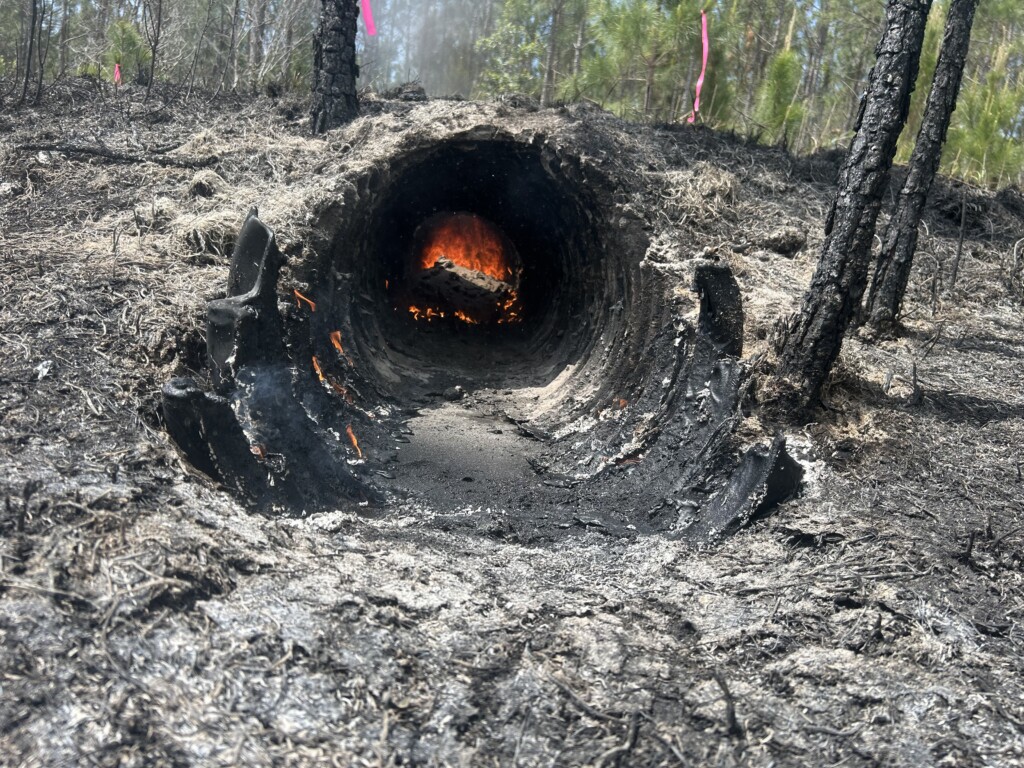 Swamp and peat fires present a much different challenge. In places like the Okefenokee Swamp and coastal shrub bogs, fires can burn deep into organic soils beneath the surface. These “ground fires” may show little visible flame while continuing to spread underground, sometimes even beneath containment lines. Smoke may be the only visible sign, and fires can continue for weeks or months during drought conditions. In the recent South Georgia fires, these areas may continue burning until the region receives 8–10 inches of rain.
Mop-up in swamp environments often involves:
- Flooding deep hot spots using sprinkler systems, drop tanks, and tanker operations
- Excavating burning peat with heavy equipment
- Creating wider containment zones
- Pumping water long distances
- Continuous infrared drone monitoring
- Returning repeatedly to check for reignition
Unlike upland fires, peat fires often require long-term suppression and monitoring.
Safety Concerns During Mop-Up
Although flames may be lower, mop-up remains one of the more hazardous phases of firefighting.
Major concerns include:
- Falling trees and snags weakened by fire
- Hidden heat and ash pits capable of collapsing beneath firefighters or equipment
- Fatigue after long operations in hot conditions
- Lingering smoke exposure
- Heavy equipment operating near crews in low visibility
- Weather changes that can quickly reignite fuels
One volunteer firefighter was recently injured after spraying water into a hot ash pit, causing hot ash, mud, and steam to erupt back into his face. Because of these risks, firefighters continue using full situational awareness and established wildland fire safety protocols even after the active fire front is gone.
Why Mop-Up Matters
A fire that appears contained can still escape if mop-up is incomplete.
Effective mop-up:
- Protects containment lines
- Reduces rekindles
- Limits smoke impacts
- Improves firefighter safety
- Protects nearby homes and infrastructure
Mop-up may not be the most enjoyable job on a fire, but it is often the most important. Without it, crews can quickly find themselves right back where they started.
Blog by: Thomas Barrett, Forest Protection Chief
Legal Disclaimer:
EIN Presswire provides this news content "as is" without warranty of any kind. We do not accept any responsibility or liability for the accuracy, content, images, videos, licenses, completeness, legality, or reliability of the information contained in this article. If you have any complaints or copyright issues related to this article, kindly contact the author above.
